This checklist helps you verify bvlgari sunglasses QC photos on a fashion-reps product detail page, separating what you can directly see in the photos from judgments based on evidence. Verification date: October 11, 2026. Current materials do not provide a confirmed bvlgari product detail page, corresponding 'View QC Photos' entry, or real QC photos for this item, so this article does not use other product images as bvlgari evidence, nor does it guarantee authenticity, quality, or whether you should order. 🔎
Purchase Task This bvlgari Sunglasses QC Verification Addresses
The specific task you need to complete is: before ordering, confirm whether the lenses, frames, logos, hinges, and temples of your chosen bvlgari sunglasses have sufficiently clear photo support, and decide whether to accept the current evidence, request additional photos from your shopping agent, or hold off ordering.
This applies only when you have found a specific product detail page and can access that same product's QC photo gallery from that page. It does not apply if you only have a brand page, category page, main product image, search thumbnail, QC photos of other products, or cannot confirm which product the images belong to.
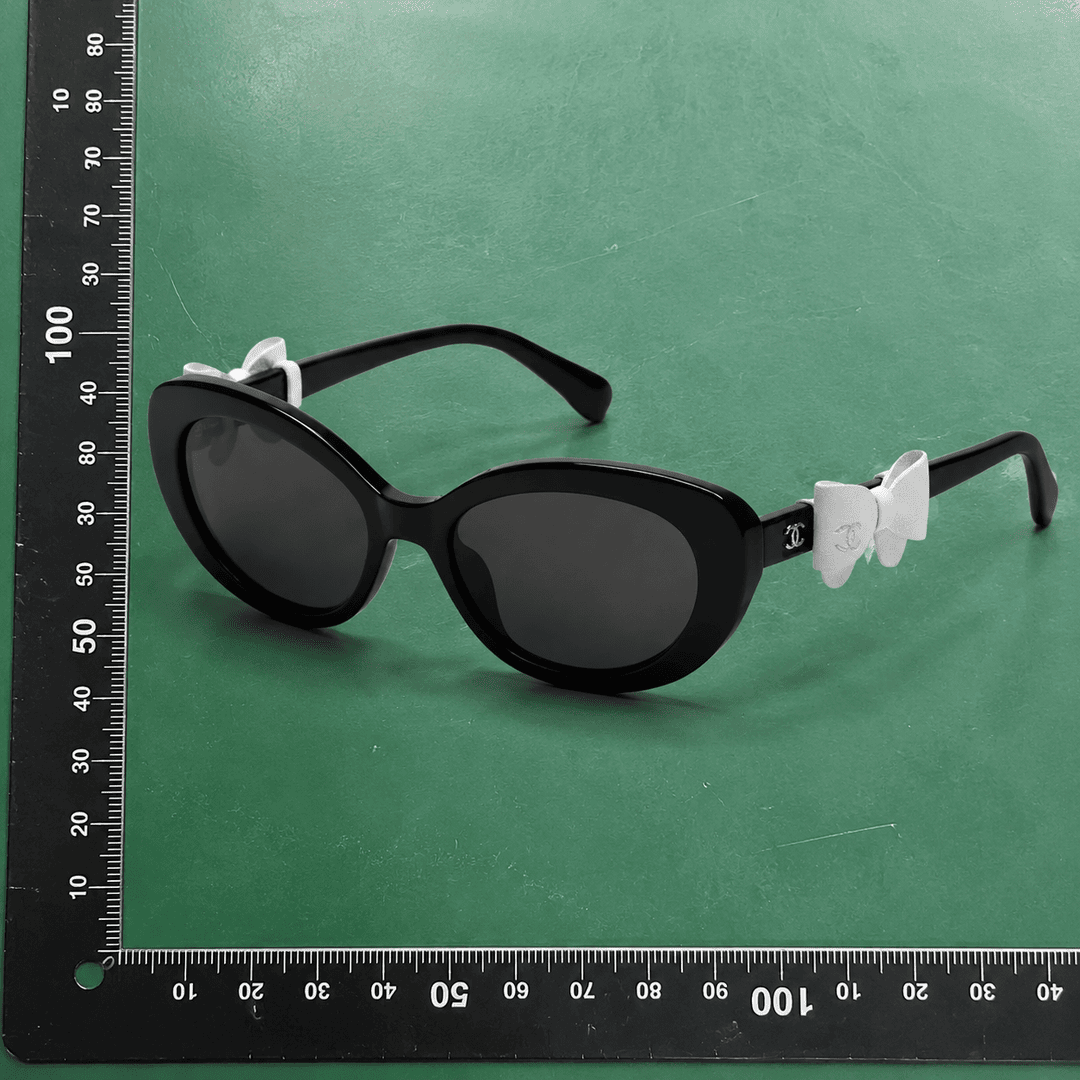
The provided image evidence corresponds to Chanel Cat-Eye Sunglasses with a Detachable Bow, not bvlgari sunglasses. It can only serve as an example for page identification and evidence boundaries; it cannot support judgments about bvlgari style, color, size, workmanship, or flaws.

Caption: The product identifiable in the image is Chanel cat-eye sunglasses, which cannot replace the real QC originals of the target bvlgari product.
Confirm Style, Color, Size, and Product Entry from the fashion-reps Product Detail Page
The first step must stay on the target product detail page; do not guess the QC address from image file names, browser URL structure, or search results. First record the visible product name, brand, style description, color, and size information; items not provided on the page should be marked as 'not specified' and not filled in with other products from the same series.
Check the following:
- Does the product name clearly include bvlgari and a specific style description?
- Is the color specified for lens color, frame color, or a two-tone combination?
- Does the size provide lens width, bridge width, temple length, or at least comparable size information?
- Do the main product image and text description refer to the same style?
- Is there a button labeled View QC Photos on the page?
- Is the button on the product detail page itself, not on related products, brand page, or category page?
If the page only shows a generic name like 'bvlgari sunglasses' without a specific style or product entry, the current evidence is insufficient to establish a QC record for a single item. You can continue looking for a more complete product page, but do not write color, size, or structural judgments yet.
Access the Real QC Photo Gallery via View QC Photos
After confirming the product detail page, click View QC Photos on the page. Once in the gallery, first check the page title, product name, style information, or other identifying fields to confirm it still corresponds to the bvlgari product you were viewing.
A valid QC gallery should meet at least the following conditions:
- The images correspond to the target product name or product identifier.
- You can see physical or warehouse angles, not marketing images.
- The images are sufficient to observe the parts this article plans to discuss.
- The gallery is not an empty page, error page, redirect page, or a collection of other products' images.
- Each image's angle and content can be recorded separately to avoid mixing different products or batches.
If the page after clicking the button shows Chanel, another brand, or a different style, stop using these images as bvlgari evidence immediately. The Chanel image in the current materials is such a case: the page summary clearly points to Chanel Cat-Eye Sunglasses with a Detachable Bow, so it cannot be transferred to a bvlgari article.
What to Look for on Lens Edges, Frame Contours, and Logo Positions
Lens Edges
First check whether both left and right lens edges appear in clear photos, then observe whether edges have obvious chips, cracks, abnormal burrs, indentations, or stains affecting vision. Photo reflections, compression, and angles can obscure details, so you can only record 'visible in photo' or 'cannot be determined from photo'; you cannot guarantee lenses are defect-free.
Also verify whether the color appearance of both lenses is consistent. Different lighting, exposure, and reflections can cause color differences; if left and right lenses are photographed in different environments, do not directly conclude color inconsistency. If lens edges are completely covered by the frame, mark as insufficiently displayed.
Frame Contours
From frontal photos, observe whether left and right contours are roughly symmetrical, and whether the top edge, bottom edge, bridge connection, and corners show obvious deformation. Frontal angles only support preliminary appearance judgments, not fit or actual optical performance when worn.
Side or oblique photos are used to observe frame thickness, curvature, and the junction between lens and frame. If side photos are missing, do not write 'structurally sound' just because the front looks flat.
Logo Positions
Record where brand logos appear—on lenses, frame, temples, or elsewhere—and note whether photos are clear enough. Logo positions and appearance details can be checkpoints, but alone they do not prove authenticity. Do not use conclusive wording like 'authentic', 'high-quality replica', 'absolutely correct', or 'guaranteed consistency'.
How to Record Hinges, Temples, and Left-Right Symmetry Photo by Photo
It is recommended to create simple records for each QC photo; you don't need to describe all photos in the same sentence. You can use the format 'photo angle, visible parts, visible facts, parts that cannot be determined, next action'.
| Checked Part | What to Confirm in Photos | Action if Evidence Insufficient |
|---|---|---|
| Hinges | Both left and right hinges appear, no obvious misalignment, breakage, or abnormal gaps at connections | Request close-up photos of left and right hinges, keeping natural open angle |
| Temples | Temple length direction straight, inner and outer logos clear, no obvious scratches or dents on surface | Request clear photos of inner and outer sides of each temple |
| Left-right symmetry | Frame, nose pads, lens height, and temple connection positions roughly correspond in frontal view | Request frontal level photo, avoid one side raised or perspective distortion |
| Lens-frame junction | Lens fully embedded, edges not obviously lifted or notched | Request close-ups of four corners and side edges of lenses |
Hinge photos cannot prove durability. They can only help judge whether visible anomalies appear in current photos. Whether temple opening and closing is smooth, damping is even, or looseness occurs after long-term use cannot be confirmed from a static image.
How to Separate Visible Photo Facts from Editorial Purchase Judgments
Use a two-column thinking: first write photo facts, then evidence-based purchase judgments.
Photo facts can be expressed like this:
- 'In the frontal photo, left and right lenses are visible, but lens edges are partially obscured by reflections.'
- 'The inner side of the right temple is not clearly shown, so the logo at that position cannot be verified.'
- 'The left hinge appears in an oblique side photo, but the right hinge has no corresponding angle.'
- 'The page provides color text, but the lighting in QC photos is insufficient to confirm accurate hue.'
Editorial judgments should remain conditional:
- 'If you need to confirm temple logos, current evidence is insufficient; consider requesting additional photos before deciding.'
- 'If you mainly care about visual symmetry, existing frontal photos can serve as preliminary screening but cannot replace side checks.'
- 'If photos of both hinges and lens edges are missing, holding off ordering is safer than relying on a single main image.'
Do not make up content not shown in photos, nor describe unclear areas as intact. The editorial perspective in this article is only evidence organization; it does not mean the author personally purchased, received, wore, or tested the product. 👓
How to Request Additional Photos When QC Images Lack Side or Detail Angles
Requests for additional photos should be as specific as possible; avoid just saying 'make it clearer'. You can ask your shopping agent for the following:
- The target product is the specific bvlgari style shown on the page, and keep the product correspondence visible in photos.
- Provide a frontal level photo showing both lenses, frame contours, and nose bridge connection completely.
- Provide oblique side photos from left and right showing lens edges, hinges, and temple connections.
- Provide close-ups of the inner sides of both temples to confirm logo positions and visible surface condition.
- Take local close-ups of suspected scratches, chips, stains, or deformations.
- Avoid strong reflections, excessive shadows, and heavy compression; add an extra photo from a different angle if necessary.
If after additional photos you still cannot see critical parts, record it as an evidence gap, not as no problem. If photos show personal addresses, phone numbers, order numbers, payment information, or complete shipping labels, do not publicly share them; ask for privacy information to be covered first.
Final Action: Accept Current Evidence, Request More, or Hold Off Ordering
With current materials, you cannot make an acceptance, rejection, or quality judgment for bvlgari sunglasses because no target product detail page and corresponding QC gallery have been confirmed; existing images belong to a Chanel product and cannot serve as evidence for the target product.
After completing real verification, decide as follows:
- Accept current evidence: target product, style, and QC gallery correspond; lenses, frames, hinges, temples, and key logos all have sufficiently clear photos, and no unacceptable visible issues appear.
- Request more evidence: product correspondence is clear, but key angles like side, hinge, inner temple, or lens edge are missing.
- Hold off ordering: product identity cannot be confirmed, QC gallery led to wrong product, photos severely blurry, or key parts persistently missing.
Savings can only be calculated based on product price, service fees, international shipping, and other possible costs shown on the shopping agent's page; current materials do not provide a valid price for the bvlgari product, so no specific savings amount can be calculated. Requesting additional photos usually increases waiting and communication costs but reduces risk of returns or losses due to insufficient evidence. It suits buyers who value appearance details, are willing to wait for more evidence, and accept the shopping agent process; not suited for those who need to order immediately, require authenticity guarantees, or cannot accept uncertainty in cross-border after-sales service. ✅