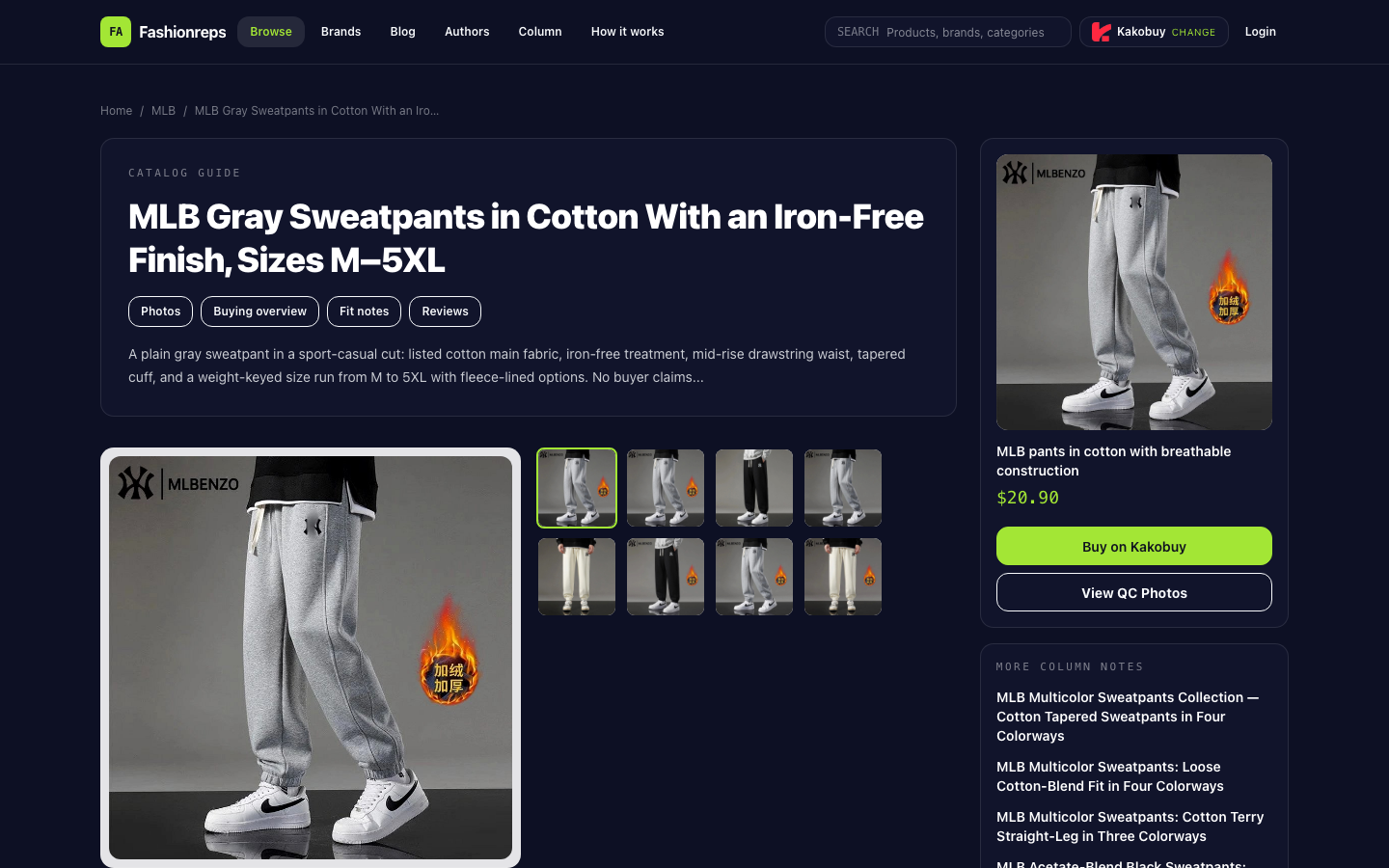

Sizing these MLB gray sweatpants isn't just about matching your weight to the M–5XL chart. Instead, treat the weight chart as a starting point, then cross-check with the flat waist and inseam measurements of a pair of sweatpants you already own and like. The product page describes them as mid-rise, drawstring, tapered-leg solid athleisure pants. The fabric is listed as cotton with no stretch, and there are regular and fleece-lined options.
What the product page actually tells you
The size chart on the product page is based on weight, measured in jin:
| Size | Page Weight Range |
|---|---|
| M | 80–100 jin |
| L | 100–120 jin |
| XL | 120–140 jin |
| 2XL | 140–160 jin |
| 3XL | 160–180 jin |
| 4XL | 180–195 jin |
| 5XL | 195–220 jin |
The page also states there is a 1–3 cm sizing variance. The colorways are gray and black, and the fit includes a mid-rise waist, drawstring waistband, and tapered legs. The fabric is described as cotton with no stretch, and the page lists care instructions like no-iron and machine washable. This information is from the catalog description, not from buyer photos or independent material testing.
Why you shouldn't order by weight alone
Your weight can narrow down the size range, but it doesn't tell you how the waistband will feel, how much room you'll have in the hips and thighs, or how long the legs will be. Two people with the same weight can have very different waist, hip, and thigh measurements and different preferences for how loose or snug they like their clothes. Since these pants are made from a non-stretch fabric, the waist and hip areas won't give like they would with a stretchy material.
The tapered leg also affects the fit. If you usually prefer a loose, straight-leg look, the size suggested by the weight chart might fit your waist but still feel too tapered through the legs and ankles. If you sit for long periods, bike, or need a wide range of motion, pay special attention to the hip and thigh room, not just whether the waistband goes on.
A more reliable three-step sizing method
- Start with the weight chart to narrow down to two candidate sizes.
For example, if your weight falls right on the line between two sizes, don't automatically size up or down. Note the two size ranges from the chart, then use your clothing preferences to decide.
- Measure a pair of sweatpants you already own and like.
Lay the pants flat, straighten the waistband without stretching it too much, and measure the flat waist width. Then measure from the crotch seam to the bottom of the leg for the inseam. Pick a pair whose waist, hips, and leg length all feel right to you. Be consistent with how you measure, and don't confuse the flat width with the full waist circumference.
- Ask your shopping agent for the flat measurements of the size you're considering.
Compare their flat waist and inseam measurements to yours, and ask whether the measurement error is also within 1–3 cm. If the agent can only confirm the weight-based size and can't provide flat measurements, treat the information as uncertain rather than using the weight range as an exact size.
How to decide between regular and fleece-lined
The regular version is better if you want a relatively lightweight pair of sweatpants for spring or fall and don't plan to layer thick thermal underwear underneath. The fleece-lined version adds thickness on the inside, so you'll need extra room in the legs and for layering. However, the current page doesn't provide specific fabric weight, fleece thickness, or full flat measurements for both versions, so you can't assume the fleece-lined option is definitely warmer or thicker, or that you should automatically size up.
Before ordering, make sure you know which variant you're getting, especially whether the regular and fleece-lined versions share the same size chart. Save a screenshot of the variant shown on the agent's page, and ask the agent to confirm the color, size, and version you want. If the page doesn't list separate waist and inseam measurements for the fleece-lined version, ask for the actual measurements of that specific version first.
Make the final call based on how you'll wear them
These pants are a good fit for someone who wants solid gray or black, a mid-rise drawstring waist, and tapered cuffs, and is willing to use both the weight chart and the agent's actual measurements to determine their size. The cut is described as more athleisure, so they're not ideal if you're looking for wide, straight legs, a belt-loop waistband, or noticeable stretch.
If you need generous room in the hips and thighs, or rely on precise waist and inseam measurements when buying pants, make flat waist and inseam measurements a requirement before purchasing. If you can only see the weight range and can't confirm the actual measurements of the variant you want, the safest move is to hold off until the product page or your shopping agent provides enough sizing information.