Bottom Line
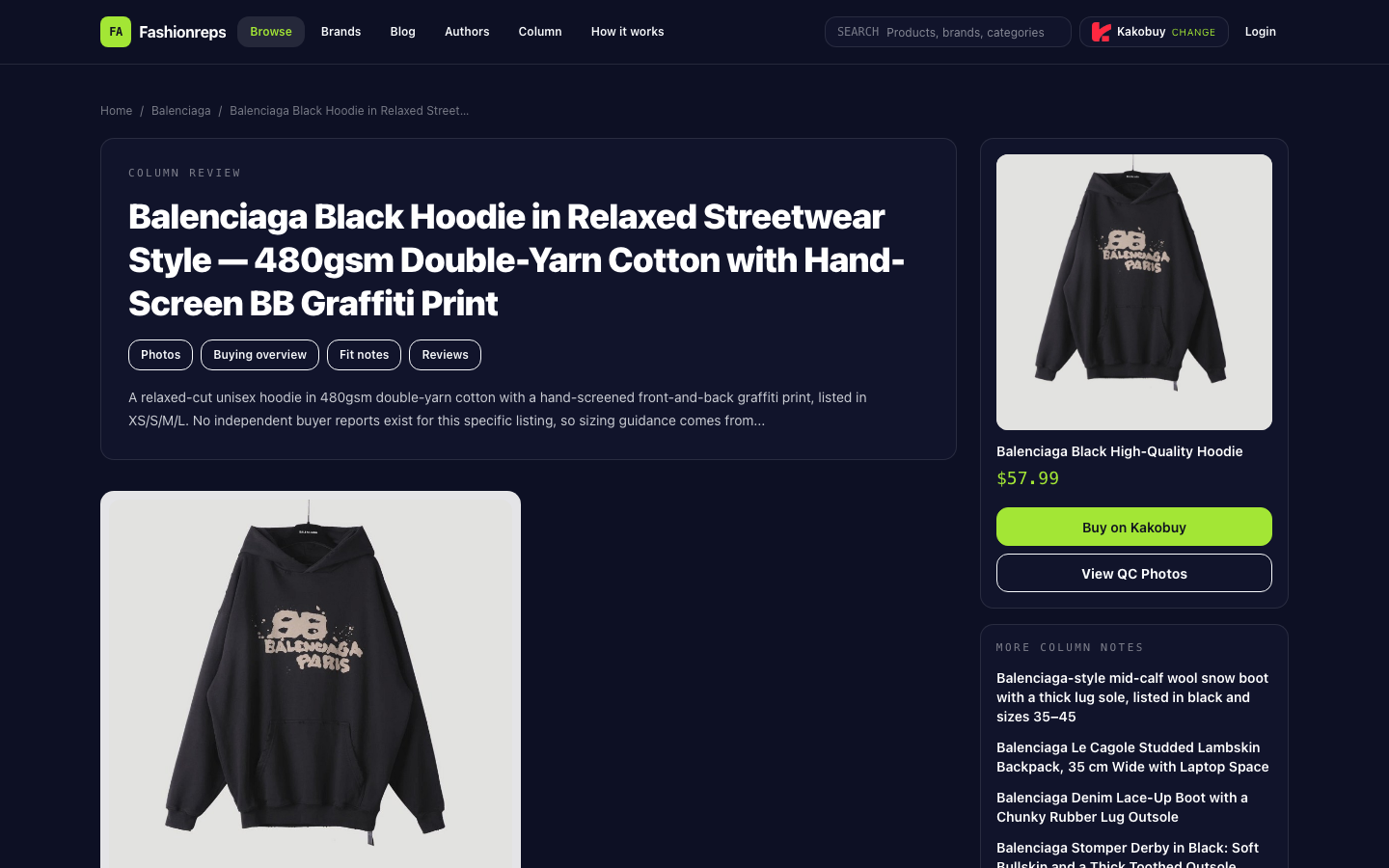
The page information is sufficient to support further verification of the print's placement and appearance consistency, but not enough to directly prove the actual print feel, fleece softness, or post-wash durability. The page describes this hoodie as 480gsm double-yarn cotton, with an oversized unisex fit, and featuring hand-screen printing on the front and back; it also claims that the pattern placement, edges, letter spacing, and size are handled with reference to the 23SS version. However, these are still product page descriptions and cannot replace close-up QC photos or physical inspection upon arrival at the warehouse.

If you are concerned about whether the pattern is off-center or the edges are neat, the next step is to request clear front and back photos; if you are concerned about whether the print is stiff, flakes off, or cracks after washing, relying solely on page images and regular QC photos may not be enough to confirm.
What Print Clues the Page Already Provides
The product page's description of the print is relatively specific, mainly including the following points:
- Both front and back have hand-screen printing.
- Description of using imported eco-friendly paste.
- The pattern placement is described as aligned.
- The print edges are described as clean.
- The letter spacing and size are described as referencing the 23SS version.
This information can help you determine the checklist for QC, but it should not be interpreted as an independent test conclusion. The page does not provide third-party buyer feedback on this specific product, so it cannot confirm the print feel, thickness, softness, or long-term durability.
What Order to Check QC Photos
After receiving warehouse QC photos, it is recommended to check in order from overall to details. This makes it easier to first spot position deviations, then judge edges and local details.
1. Overall Front View
First look at the front pattern's position relative to the body center line, shoulder line, and pocket area. The point is not to require every photo to be from the exact same angle, but to observe whether the pattern is obviously skewed to one side, whether the height is abnormal, or whether the left-right visual balance is off.
If the garment is not laid flat, wrinkles, hanging angle, and lens perspective can cause misjudgment. In such cases, request a supplementary overall photo with the garment naturally spread out and the lens as straight-on as possible.
2. Overall Back View
The back print should be checked separately and cannot be inferred from the front photo. Check whether the distance between the pattern and the back collar, shoulders, and hem is roughly coordinated, and observe whether there is obvious left-right shift or tilt.
The page only states that there are prints on both front and back, and describes alignment and size reference, without providing official size standards for quantifying deviations. Therefore, QC photos can at most help you judge whether there are visible issues, not prove exact consistency with the reference version.
3. Close-up of Pattern Edges
Zoom in to check whether letters, coating, and outline edges have obvious rough edges, gaps, broken lines, ink bleeding, or uneven coverage. The close-up must be clear enough and not overly compressed; otherwise, edge pixels and fabric texture will blend together, making it hard to judge.
The page describes the edges as clean, but the current materials do not show independent detail evidence for point-by-point comparison. If the close-up cannot cover the main letters and complex corners, do not treat "looks okay" as complete confirmation.
4. Hood, Cuffs, and Hem
Check whether the hood and cuffs obstruct or pull the pattern, and whether the hem causes print deformation due to fit, folding, or stitching. If the print is close to seams, pay special attention to whether edges are cut off or unnaturally stretched due to fabric tension.
The condition of these areas cannot be inferred solely from the page's introduction of the main pattern; it must be based on actual photos.
What Questions Page Photos Cannot Answer
Even if the front and back pattern positions look normal, several key issues cannot be confirmed from the existing page information:
- Whether the print feels stiff or has an obvious plastic feel when touched.
- Whether the print surface is flat or has local thickness differences.
- Whether the inner fleece is soft or has roughness or shedding.
- Whether it is prone to cracking, powdering, or peeling after wearing and washing.
- Whether the 480gsm label has undergone independent weighing or fabric testing.
The page also indicates that fabric quality, print feel, and fleece softness typically require hands-on judgment after receipt. In other words, photos are suitable for confirming placement and visible flaws, not for proving feel and long-term performance.
How Much Confidence to Keep in Care Judgment
For this type of heavy cotton hoodie, the page suggests washing inside out, using cold water, and avoiding high-temperature drying to reduce shrinkage and pilling risks. This can be a cautious care recommendation, but it does not guarantee that this specific product will not shrink or pill after washing.
Without physical fabric testing and long-term wear feedback, the safer approach is to:
- Record length, chest, and sleeve measurements before first wash to observe changes.
- Wash inside out with cold water and a gentle cycle.
- Avoid high-temperature drying; air dry is preferred.
- Do not infer wash resistance solely from the page's 480gsm label.
- If the print already shows edge lifting, cracks, or partial peeling, stop washing and keep photo records.
Actions Based on Three Types of Evidence Results
Complete Evidence: Can Continue Considering
If QC provides both front and back overall photos, clear close-ups of main patterns, and photos of areas prone to obstruction such as hood, cuffs, and hem, and no obvious misalignment, rough edges, gaps, or uneven print coverage is found, you can continue to evaluate whether to accept this product.
But this only means the visible appearance meets your acceptance criteria, not that the print feel, fleece softness, or post-wash durability has been proven.
Need More Photos: Do Not Confirm Yet
If only distant photos, angled shots, or unclear print edges are available, request additional photos. Be specific in your request, for example:
- One flat overall photo of the front and one of the back.
- One close-up detail photo of the front print and one of the back print.
- Partial photos covering main letters, corners, and edges.
- Photos of the junctions between the hood, cuffs, hem, and the print.
If after supplements the details are still unclear, do not treat missing information as normal quality.
Cannot Verify: Give Up This Judgment or Accept Uncertainty
If neither the page description nor QC photos cover key areas, or the photo resolution is insufficient to judge edges and placement, then you cannot reliably confirm print consistency. In this case, you can choose not to continue confirmation, or proceed on the premise of fully accepting uncertainty, but you cannot treat the page's description of hand-screen printing and clean edges as a guarantee of the physical product.
Final Verdict
This black hoodie is currently worth doing another round of QC verification specifically for the print, especially the overall placement of front and back patterns, edge integrity, and relationship with seams. The page information is sufficient to build a checklist, but not enough to alone support the conclusion that "print quality is confirmed."
If your purchase threshold is that the pattern must not be obviously off-center and edges must not have visible defects, then you should first obtain clear front, back, and close-up photos. If your threshold also includes soft feel, print wash resistance, and long-term no pilling, then even if QC photos pass, you still need to treat these items as unverified risks.