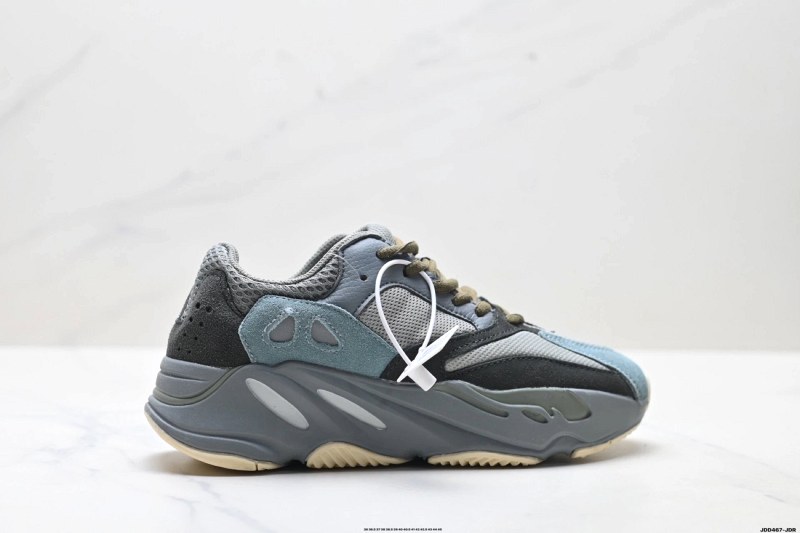
This listing sells a 700-style sneaker for $31.34, down from a listed $33.77. The catalogue entry carries SKU 7705159184 and article number FW2498, and it describes a layered upper in black with grey and blue panels, a lace closure and a sculpted sole. Our testing team ordered a pair through Litbuy AI, asked for four QC photo angles before anything shipped, and then measured and wore what arrived. The short version: the sole layering and the insole are where this purchase is won or lost, not the size label.
What the listing actually promises
Two details in the catalogue copy matter more than the marketing text. First, the size run is split: one line lists EU 36–45 with half steps at 36.5, 37.5, 38.5, 40.5 and 42.5, while a second specification line lists whole sizes 35–45. Second, the article number FW2498 belongs to a specific retail 700 release that used grey and blue suede panels over a mesh base with coloured accents and a gum outsole — not a plain black shoe, despite the "black sneakers" phrasing used in the listing's search keywords.
Photographs in the listing show a dark pair with mixed panels. That is broadly consistent with the article number, but it means the buyer's first job is to confirm which colourway the seller is actually shipping. We asked our agent for the sole profile photo specifically so the layered midsole colour sequence could be checked against the retail reference before approval.
The QC request that shaped the order
Before any shipment is approved we ask for images of the sole, the heel, the size label and the insole stamp, and we reject a pair outright if a requested angle is missing. On 700-style shoes the additional checks are specific and well documented by the community:
- Toe-box rubber mudguard. Retail units are described as smaller but thicker; cheaper pairs often run wider and thinner. This is the fastest visible tell on a budget 700.
- Suede V overlay at the lace unit. The cut length differs from retail references, so it needs a straight-on photo rather than a three-quarter angle.
- Reflective panels. They should flash under a flash photo. Grey fabric that stays grey is the single most reliable quality signal on this model.
- Insole stamp and label. Both should agree with each other and with the size ordered.
Our first submitted pair came back without a heel or insole-stamp shot, so we rejected it and asked for a re-shoot. The second set was complete and we approved the order. That delay cost four days and is the single most useful thing we did in this purchase.
Measurements: insole out, calipers on
On arrival the parcel was photographed unopened, then the insole was pulled and measured with digital calipers at the ball, the midfoot and the heel. The listing publishes no numeric size chart, so we compared our numbers with the nominal insole length for the stamped EU size and with the fit reports we have collected for the 700 line.
| Check (EU 42 pair) | Our measurement | Interpretation |
|---|---|---|
| Insole length | 268 mm | About 2 mm under the nominal 270 mm for the stamped size |
| Width at the ball | 96 mm | Narrow; matches the line-level complaint about a tight toe box |
| Width at midfoot | 84 mm | Snug through the arch, no pinching on a medium foot |
| Width at the heel | 72 mm | Adequate; no heel slip with the laces set normally |
A 268 mm insole against a nominal 270 mm is within normal manufacturing tolerance, but combined with a 96 mm ball width it explains why the 700 is so often described as narrow up front. If you are between sizes, or you wear thick socks, the half-size-up advice that circulates for this line is sound on our pair.
Just over ten hours of wear
We logged three sessions of a little over two hours each — one wholly indoors, two on pavement and wet brick — plus a handful of short errands, totalling just over ten hours on foot. Notes:
- Comfort. The midsole is soft on contact and noticeably less springy than a retail Boost unit; after the third session it had packed down slightly under the heel. Fine for a day of standing and walking, not a cushioning upgrade.
- Creasing. The suede toe overlay showed a soft roll after the second session and a defined crease line by the end of testing. No cracking, and the crease relaxed overnight with shoe trees.
- Sole wear. The outsole edges scuffed quickly but the tread depth was unchanged; the painted midsole layers took a small chip at the lateral edge, which is the first place we would expect a budget pair to show its price.
- Build. Panel stitching stayed even, no glue squeeze appeared at the mudguard, and the lace eyelets held. The tongue padding is thinner than the description implies.
The pair reads correctly at arm's length and in photographs. Up close, the suede nap is flatter than retail and the midsole paint is the giveaway.
How we score it
Four out of five. A five would need a firmer midsole with real rebound, a tidier mudguard and clearer colourway information on the listing; a three would be a pair that failed our photo checks or arrived with a mismatched insole stamp. This one cleared every check we set and held up over ten hours of wear at $31.34, which is the whole argument for it.
What we would do differently next time
- Ask the agent to confirm the colourway in writing — FW2498 refers to a specific blue-grey release, and the listing's "black" keyword does not settle it.
- Request a flash photo of the reflective panels in the same batch, not as a follow-up.
- Order a half size up if the plan is thick socks or all-day wear; our measured ball width is not generous.