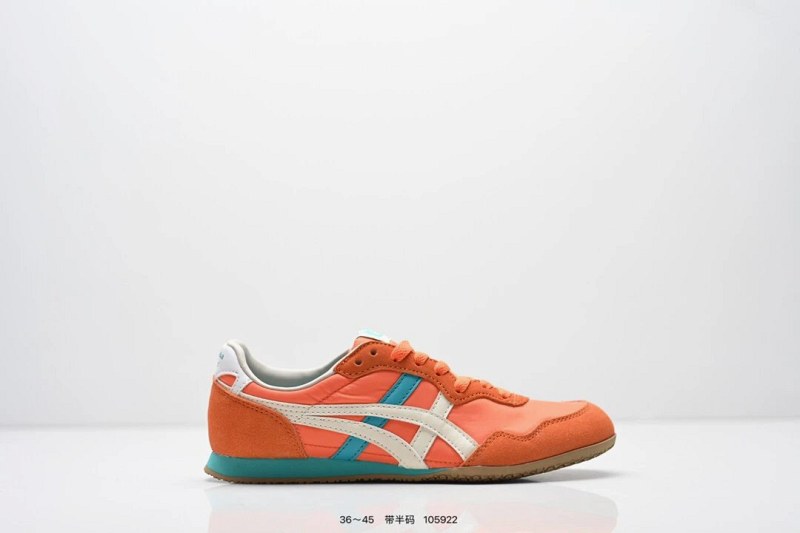
This listing sells an orange low-top Onitsuka Tiger-style trainer for $34.48, marked down from $40.90 and in stock at the time of writing, under SKU 7704992700. We ordered a pair through Litbuy AI, cleared the QC photos before the parcel left the warehouse, and then wore them the way we wear everything else: indoors first, then outdoors, in repeated sessions with notes on creasing, sole wear and comfort. What came back is a genuinely light, pliable retro sneaker at a fraction of the price of the branded original — attached to a listing that cannot decide which Onitsuka model it is selling.
What we checked, and what came back
Nothing is approved for shipping until the QC set includes the sole, heel, label and insole stamp. If an angle is missing, we reject the pair rather than hope. On arrival the insole comes out and gets measured length and width at three points, then compared against the seller's size chart. Here is how the checks resolved.
| Check | What we did | Result |
|---|---|---|
| Pre-shipment QC | Requested sole, heel, label and insole-stamp images | All four angles supplied; sole pattern and Tiger-style side stripes read cleanly in the photos |
| Model identification | Compared the label and the shoe's shape against the listing's own description | Style code on the feature copy (1183B400-407) belongs to the Serrano family, not the Mexico 66 named in the title |
| Insole measurement | Calipers at heel, midfoot and forefoot against the seller's chart | Consistent with the listed chart; no shortfall worth flagging |
| Wear sessions | Three sessions of two hours or more, indoors and outdoors | Light toe-box creasing by session two; no measurable outsole wear |
| Wet pavement | Short walk after light rain on tile and painted asphalt | Noticeably slippery — matches the listing's own warning |
The model question you need to settle before ordering
The title says Mexico 66. The feature copy describes the Serrano — "slightly upturned front," "thin sole," "Solyte/EVA midsole" — and quotes style code 1183B400-407. Those are two different shoes with two different lasts. The Mexico 66 is the flatter, narrower, near-4 mm-drop heritage shape; the Serrano is the 1970s track-inspired sibling with a slightly more generous forefoot and a touch more underfoot fill. The style code quoted on the listing is not only a different model, it is also a pale "Soft Sky" colorway in public catalogues, which does not match the orange upper described.
Listing feature copy, translated: "Breathable leather and synthetic upper, leather lining, slightly upturned front, thin sole, Solyte and EVA midsole, rubber outsole — though buyers report it is not very slip-resistant, so take care in the rain."
In the hand, our pair leans toward the Serrano reading: the forefoot outsole rolls up slightly at the toe, and the upper has a smooth, lightly panelled look rather than the Mexico 66's busier overlay stack. Treat the model name as unconfirmed until the seller sends a label photo showing the actual style code. That single image is worth more than any amount of description copy.
Fit and sizing: split reports, narrow last
Published owner reports disagree, and our pair did not resolve the argument. Some Mexico 66 wearers take their normal size; others insist on a half size down, including one reviewer who normally wears a 13 in the adidas Samba and Nike Flyknit and found a 12.5 correct even with wider feet. Serrano reviews, meanwhile, describe a true-to-size but slightly narrow fit. Our insole measured in line with the seller's chart for the size ordered, so the length is trustworthy; the width is where the risk lives. The last is low and tapered, and the listed range of 36–45 with half sizes is broad enough that most people can move a half step either way. If your forefoot is wide or your toes splay, plan to size up rather than talk yourself into the smaller number.
On foot: almost no break-in, almost no cushioning
The pleasant surprise is how little the pair needed. Pliable uppers and a thin, flexible sole meant no blisters across the first two-hour session, and by the third the shoe felt settled rather than stretched out. That matches the strongest comfort evidence for this silhouette, where reviewers describe the Mexico 66 as comfortable out of the box over multi-mile days.
The trade-off is the sole. There is very little foam under the forefoot, so you feel paving joints and kerbs directly, and long walks on hard ground are a chore rather than a pleasure. Grip is the second weak point: the listing itself cites buyer feedback that the outsole is not very slip-resistant, and our wet-tile test agreed — the compound skates on smooth, damp surfaces. Keep them for dry days. The upside of the thin build is weight and packability; they fold into a bag far more gracefully than a cushioned trainer.
Value, and how the orange reads
At $34.48 against a $40.90 list, the maths is easy: that is roughly a quarter of what an inline Mexico 66 costs in Europe, and the colourway does the heavy lifting. The orange base with white side stripes and a white heel tab is loud in the right way, and the teal accent along the lower edge plus the gum outsole keeps it from looking like a plain fashion shoe. It pairs with jeans, track pants and shorts without effort, and a cap or tee in the same orange pulls the outfit together.
What it is not is a durable daily driver. Thin outsoles of this type wear at the heel edge first, and the soft leather creases readily across the toe box — we saw the first folding by the second session. Rotate the pair rather than wearing it five days a week and the finish will hold up much better.
What to confirm before you order
- Ask for a label or box photo showing the style code, and confirm whether you are receiving a Mexico 66 or a Serrano. Both are sold under this one title.
- Confirm the colourway in the QC images, since the quoted code points to a pale blue-grey release, not orange.
- Agree the size against your measured insole length, not your usual brand size — the width is the variable, not the length.
- Accept that rain wear is a compromise. The listing says so, and our test confirmed it.
None of that undermines what is on your foot: a light, quick-to-wear, visually convincing retro trainer for the price of a mid-range t-shirt. It undermines only the paperwork.