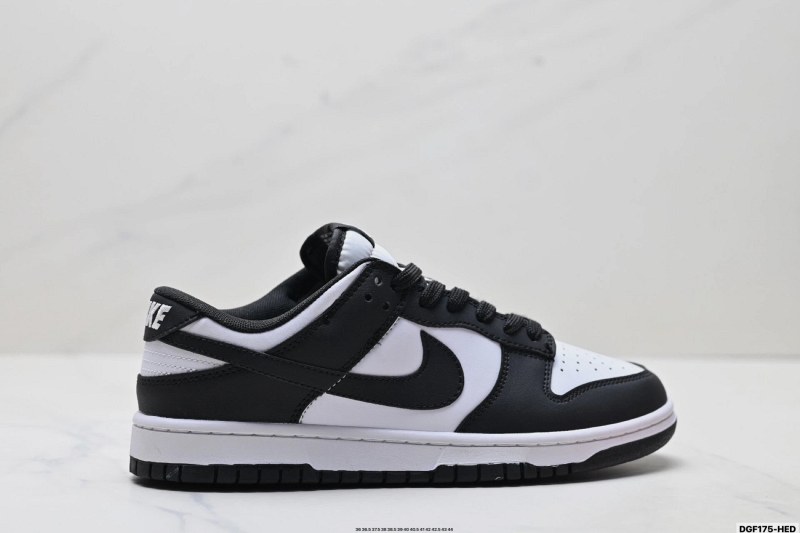
The Nike Dunk Low in black and white needs no introduction: white underlays, black overlays, a black Swoosh, a white midsole over a black outsole, and style code DD1391-100 on the label. This listing, bought through our Litbuy AI account, is priced at $15.51 and runs from size 36 to 45 with half sizes. We ordered a pair, put it through our standard checkpoints and wore it for three sessions before writing this.
What we checked, and what the pair returned
Before the parcel left the warehouse we asked for QC images of the sole, the heel, the size label and the insole stamp. A missing angle is a rejection for us, and all four arrived. On arrival the insole was pulled and measured at the heel, midfoot and forefoot against the seller's chart before anything was worn outdoors.
| Checkpoint | Method | Result on our pair |
|---|---|---|
| QC photos | Sole, heel, label and insole stamp requested before shipping | All four supplied; nothing missing |
| Style code | Label and insole stamp compared with DD1391-100 | Matched the listing |
| Insole sizing | Length and width at heel, midfoot and forefoot vs. the size chart | Consistent across all three points |
| Wear sessions | Three sessions of two hours or more, indoors and on pavement | Comfortable at two hours, firm beyond |
| Wear logging | Creasing, midsole scuffing, outsole loss | Toe-box creasing in session one; outsole intact |
Sizing: two size lines that do not agree
The listing carries a size line of 36, 36.5, 37.5, 38, 38.5, 39, 40, 40.5, 41, 42, 42.5, 43, 44 and 45, plus a separate specification line that reads 35, 41, 36, 37, 38, 39, 40, 42, 43, 44 and 45. The second line drops the half sizes and adds a 35. Treat that as a clerical mess rather than a second size chart, and confirm your exact EU size in writing before paying.
Our test pair measured true to its labelled size, but published fit guidance on the Dunk Low is not unanimous. The narrow toe box is the single most common complaint, and wide-footed buyers are routinely told to go up half a size. Against that, at least one long-term reviewer found the Dunk roomier and wider than an Air Max and said he would size down half a step next time. If your feet are broad, size up; if you are between sizes and used to narrow trainers, stay put.
Panels, stitching and finish
The two-tone layout is the whole point of this colourway, and on our pair it landed cleanly: the black overlays sat symmetrically on both shoes, the perforated toe box was punched evenly, the Swooshes were level with each other and the heel-tab embroidery was legible with no loose threads.
The flaws were smaller and typical of the model. There was a faint haze of glue where the upper meets the midsole at the lateral heel, and the leather is thin and papery rather than supple — consistent with the general-release QC inconsistency documented in Dunk Low buying guides. That evidence is a caution, not a verdict on every pair: quality on this silhouette varies from unit to unit, which is exactly why the pre-shipment photo request matters.
"It is inconsistent, so inspect any pair before you commit to the buy." — published Dunk Low buying guide
Six hours of wear
Session one, two hours indoors, was uneventful. The padded collar held the heel without slipping, the tongue stayed put and nothing rubbed. Session two, two hours on pavement, changed the picture: with no Air unit and a firm mid-1980s-style EVA midsole, the forefoot and heel felt flat by the ninety-minute mark. Session three repeated the result, so it is not a break-in artefact. A thin aftermarket insole fixes most of it; if you need all-day cushioning out of the box, this is not that shoe.
Creasing appeared across the toe box during the first session and deepened slightly after the second. There was no separation at the midsole join and no visible outsole wear after roughly six hours, which lines up with the 8-out-of-10 durability that buyer guides award the silhouette for casual use. In our five-point terms this lands at 4.0 / 5: good, with reservations about cushioning and pair-to-pair consistency.
Styling and price context
Black and white is the reason the Panda outsells every other Dunk Low colourway. It takes jeans, track pants, shorts and a grey sweatshirt without a second thought, and the low profile keeps it wearable across seasons. The one styling note is maintenance: white panels and a white midsole show road grime quickly, so keep a cloth and a midsole eraser nearby.
The price needs framing. Nike lists DD1391-100 at $115, and after repeated restocks Panda pairs now sit at or below retail rather than at resale premiums. At $15.51 this is a budget marketplace listing bought through an agent, not a boutique purchase, so judge it against what it promises — the right silhouette in the right colours at a labelled size — and budget for international shipping and agent fees on top of the sticker price.
What we could not verify
The listing does not state upper material composition, and we cannot confirm from handling whether the overlays are leather or synthetic. No weight is published for the pair. We tested one unit, so we cannot say how consistently the 36–45 run sizes or how often the glue haze recurs. And because the size information appears twice in conflicting forms, the safest step remains asking the agent to confirm your size against the physical label in a QC photo.