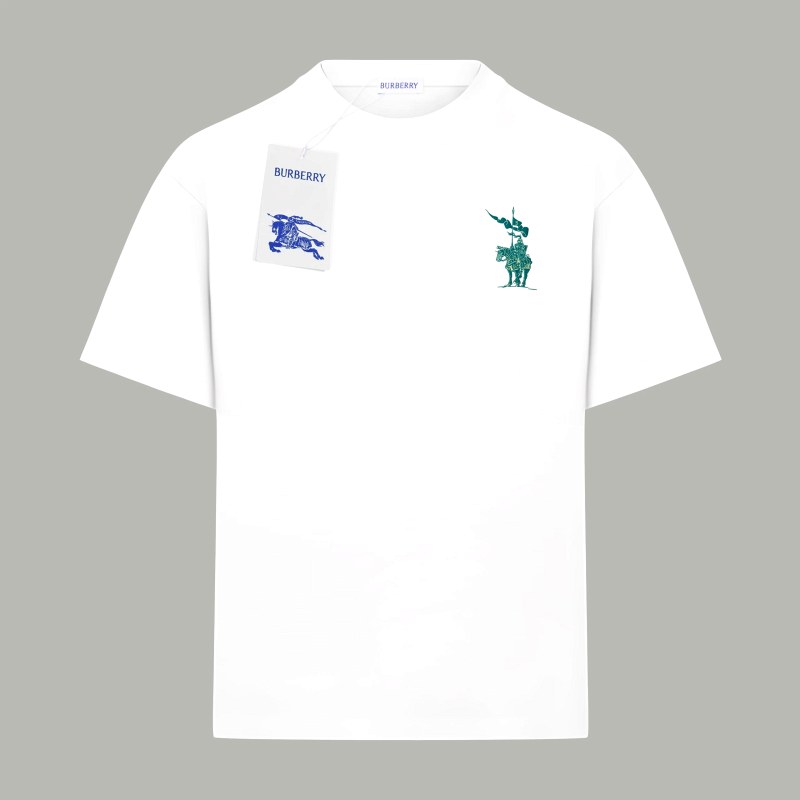
We ordered one Burberry Blue Logo Print T-shirt through Litbuy AI at $23.51, down from a listed $24.96. It arrived folded, with a blue branded hangtag on a white cord at the collar. The shirt itself is white, with a small green equestrian knight printed on the chest. Our testing team put it through the desk's apparel routine: QC photos before shipping, flat measurements on arrival, three wear sessions of two hours or more, and two 30 °C washes.
What the listing promises
| Item | Listing detail |
|---|---|
| Product | Burberry Blue Logo Print T-Shirt |
| SKU | 7702141077 |
| Price | $23.51 USD, reduced from $24.96 |
| Availability | Listed as in stock |
| Body fabric | 280 g double-yarn cotton, seller's claim |
| Neck trim | 300 g cotton ribbing, seller's claim |
| Cut | Unisex, relaxed, dropped shoulders |
| Colours | White, apricot, black |
| Listed sizes | XS–XL in one line; S–3XL in another |
The 280 g body weight is the claim that shapes everything else. That figure sits in heavyweight jersey territory, well above the light cotton most everyday tees use, and it explains the shirt's straight drape and its warmth. We treat the number as the seller's statement rather than a measured fact because we did not cut a swatch and weigh it. The double-yarn description is a softness claim, not a durability guarantee, and the same caution applies.
What we checked before shipping
For a T-shirt, our QC request is the apparel equivalent of a footwear angle check: close-ups of the chest print, the rib where it meets the neckline, the interior neck label and the hangtag. All four arrived for this unit. We looked for a level, centred motif, clean print edges, an even rib join without puckering, and a label that was stitched flat rather than twisted.
For a tee, the print edge, the neck rib and the interior label are the angles that decide whether we accept the parcel. A missing angle means a rejected item, not a detail we guess at.
Nothing on this unit justified rejection. The knight sat centred, the print boundary was crisp rather than fuzzy, and the collar rib met the body without a visible ridge. Photographs cannot show how a print behaves after washing, so the wash test carries that part of the review.
Fabric and finish in hand
Out of the bag, the jersey felt denser and drier than a standard retail tee. It has a close, smooth hand rather than a brushed softness. Against a midweight reference on our light box, it stayed fully opaque across the chest and shoulders, which is consistent with the seller's heavyweight claim even though the exact gram figure remains unverified.
The green chest mark is small enough to leave useful white space above and below it. That is what makes the shirt easy to layer: an open overshirt or jacket does not bury the motif. The blue hangtag is a separate, louder element at the collar. It is visible whenever the neckline sits flat, and it is the detail most likely to divide people.
Finish was tidy on the unit we received. The hem ran even, the sleeve joins were flat, and we found no loose threads at the side seams. The collar felt substantial, which supports the heavier ribbing claim without proving the exact weight.
Fit and the size-list contradiction
The cut matches the listing's description: the shoulder seam falls beyond the natural shoulder line, the sleeve is roomy rather than fitted, and the body runs straight to the hem. It is a unisex block, so the same shirt is intended to work across the size range.
The problem is the size chart. One line in the listing offers XS through XL; another offers S through 3XL. Both cannot describe the same garment. We ignored the letters and measured the flat chest width and body length on arrival, then compared them with the chart for the size we ordered. The chest figure matched closely. The hem landed a little lower than the chart implied, which is what a dropped-shoulder block tends to do.
If you are between sizes, choose on chest room first and expect the hem to sit lower than a standard tee. Measure a shirt you already like flat and use those numbers rather than the letter on the label.
Six hours of wear and two washes
Three sessions of two hours or more covered the parts we care about: two indoors and one outdoors on a mild Rotterdam afternoon. Creasing appeared at the waist and behind the elbows but relaxed out within about twenty minutes of hanging. The collar stayed flat rather than curling. In direct sun the cloth felt warm; this is not a shirt for a heatwave.
After two washes at 30 °C, the print showed no cracking or lifting at the edges. The hem stayed even, the neckline did not stretch out, and shrinkage was minimal enough that the second fit was indistinguishable from the first. We would still avoid a hot tumble dry on cotton this dense.
How we would wear it
This works best as a layering tee. Straight-leg olive chinos and off-white sneakers suit a weekend lunch, with a navy overshirt left open so the chest mark stays visible. The white base also takes a black or charcoal outer layer without the print competing for attention.
The blue tag is the one styling decision to consider. It sits at the collar rather than the chest, so it reads clearly when the neckline is flat and disappears under a zipped jacket. If you prefer a quieter neckline, check how the tag is attached before ordering rather than assuming it can be removed cleanly.
What to verify before ordering
- Ask the agent for current QC photos of the exact colour you select. The apricot and black options should not be judged from the white shirt's photos.
- Confirm the size chart for your option. The two listed runs conflict, so chest width and body length matter more than the letter.
- Treat the 280 g figure as a seller claim. The shirt we received was dense and opaque, but we did not weigh a fabric sample.
The listing describes the shirt as in stock at the time of writing. Price and availability can change, so re-check both before placing an order.