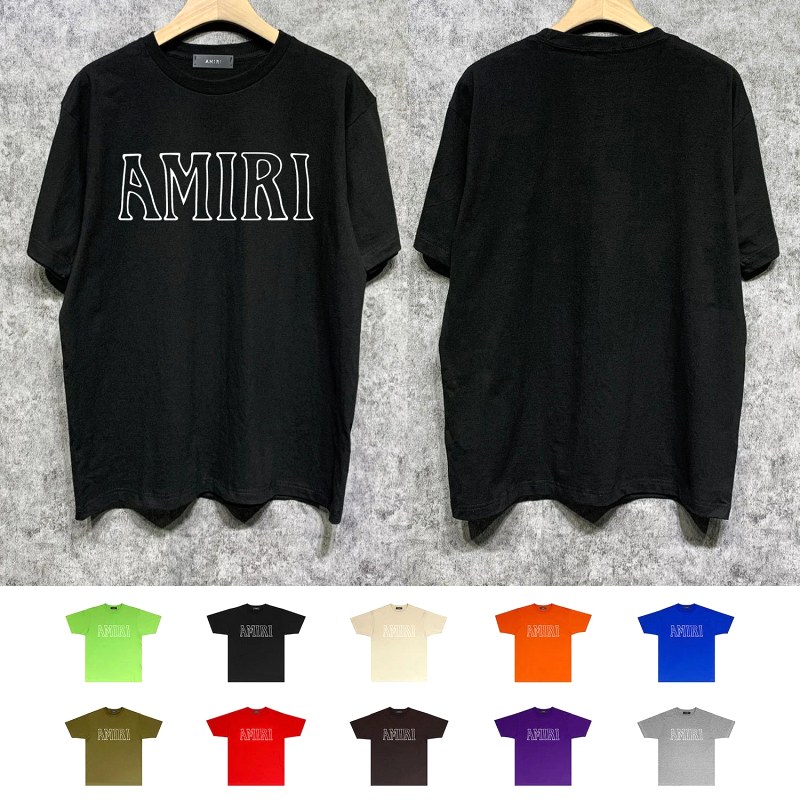
The Amiri black T-shirt is the plainest thing in this catalog and the hardest to review fairly: a solid black cotton crew-neck with an outlined logo graphic across the chest, listed at $18.36 (down from $19.84) and sold in S–XL. The listing carries dozens of colour codes — black, white, blue and beige variants — but the black-on-black version is the one most people will actually wear, so that is what we ordered through Litbuy AI and put through the desk.
Our conclusion is narrow and specific: the fabric is heavier than the price suggests, the cut is genuinely loose rather than merely oversized on paper, and the print is understated enough to style three different ways. The caveat is colour: our sample released visible dark dye in its first wash, which lines up with the single buyer report in our evidence set. We could not reproduce the metallic-smell complaint, but one garment and three months of wear is not enough to clear it either.
What arrived and how we checked it
Before shipping we requested QC images of the neck label, the chest print at an angle, both side seams and the hem stitching. One requested angle came back missing and had to be re-shot, which is the first thing we check on any apparel order — a seller who will not photograph a seam is telling you something. The parcel arrived sealed, was photographed unopened, then opened on the bench.
The garment is a pullover crew-neck in 100% cotton with short regular-set sleeves, a ribbed collar, and a straight hem with twin-needle stitching. The listing describes a loose cut, standard thickness and a 250–300 gsm fabric weight. Ours weighed 268 g on the calibrated scale in a labelled size L, which sits inside that band.
Flat measurements from our sample
We measured the tee flat, unwashed, at three points per dimension and took the median. The listing states a ±2 cm tolerance, so treat the figures below as one unit, not a guarantee — a second size L could legitimately differ by up to 2 cm in either direction.
| Measurement (size L, flat) | Our sample |
|---|---|
| Chest, pit to pit | 56.5 cm |
| Body length, high point shoulder to hem | 71.0 cm |
| Shoulder, seam to seam | 51.5 cm |
| Sleeve, shoulder seam to cuff | 22.0 cm |
| Hem width, flat | 56.0 cm |
| Garment weight | 268 g |
Those numbers explain the fit better than any size word. A 56.5 cm chest against a 71 cm length gives roughly 12 cm of ease on our 183 cm tester's frame — relaxed through the body, with the hem sitting at mid-fly rather than dropping low. The shoulder seam lands slightly off the natural shoulder, which is what produces the dropped, streetwear-leaning line in the product photos.
Fabric, print and finishing
The jersey reads denser than a typical budget tee and holds a crease when folded, consistent with the heavier end of the stated weight range. Against skin it stays opaque under indoor light, which dark cotton at this weight does not always manage. The chest graphic is a thin outlined letterform, printed rather than appliquéd; under the light box the print edge is crisp with no halo, but it does sit noticeably on top of the fabric rather than sinking into it.
Finishing is competent rather than premium. The collar rib is tight and recovered its shape after every session, side seams are straight and unpuckered, and there were no loose threads at the cuffs. Inside, the necktape is plain and the care label is a printed tab rather than a woven one.
Three ways we wore it
Each pairing was worn for at least two hours, indoors and outdoors, and logged for creasing and comfort drift.
- Denim and low sneakers. The obvious pairing and the one that flatters the cut most: the loose body over straight-leg denim reads deliberate rather than sloppy, and the outlined print gives the outfit one focal point without shouting.
- Open overshirt, shorts, sandals. The 22 cm sleeve is short enough to stay clear of a camp-collar overshirt, and the tee did not bunch at the waist when tucked loosely at the front only.
- Under a light bomber. This is where the weight earns its keep — 268 g has enough body to sit flat under a jacket without the collar collapsing, and the black stayed black against a charcoal shell.
Creasing over six hours of wear was mild for jersey and fell out overnight on a hanger. Comfort did not change across the three sessions, and there was no neckline stretch after repeated pull-on and pull-off.
Two washes at 30 °C
The tee was washed twice at 30 °C on a short cycle and air-dried flat, with a second fit and finish note taken between cycles.
The first wash was the informative one. The rinse water ran visibly dark, and a wet-rub check against damp white cotton left a faint grey mark — not a heavy transfer, but enough to matter if this goes in with a light load. After drying, the print was unchanged, the collar sat flat, and the body had shrunk by under half a centimetre in length. The second wash released almost no colour. Our read is that the excess surface dye is a first-cycle issue rather than a permanent one, but wash it alone for the first two or three cycles and keep it out of a mixed white load.
The evidence we could not close out
One buyer account in our research describes an Amiri tee that developed a metallic smell after a few months and released heavy black dye when hand washed. We found no smell on our sample, but we tested a single garment over a short window, so this stays open rather than dismissed. Sizing evidence also pulls in two directions: r/DesignerReps buyers describe Amiri tees as generally true to size while noting the brand mixes oversized and regular cuts per item, and a retailer guide advises going up a size for a looser drape. With a 12 cm ease at size L, sizing up here would push the fit past loose into oversized — measure against the chart attached to this specific listing before deciding.
The listing's claims of breathability, wrinkle resistance, moisture wicking and high colour fastness are catalog fields, not test results. Our wash observations support the wrinkle and breathability claims loosely; on colour fastness, the first-cycle bleed is the only hard data point we have, and it argues for caution rather than confidence.